
Summary Sheriff
What is a Summary Sheriff?
Summary Sheriffs are full-time salaried judges who serve in sheriff courts across Scotland. Created by the Courts Reform (Scotland) Act 2014, this role plays a vital part in ensuring swift, fair, and accessible justice for civil and criminal matters.
Summary Sheriffs handle a wide range of cases, from summary criminal trials and simple civil disputes to family cases, children’s referrals, and Fatal Accident Inquiries. They often work closely with the public and are expected to actively manage court business with efficiency and empathy.
Eligibility
Eligibility for the office of Summary Sheriff is set out in Section 14 of the Courts Reform (Scotland) Act 2014. Immediately before appointment you must:
- Hold any other judicial office specified in Section 14, or
- Be legally qualified (either as an Advocate or a Solicitor) for a period of 10 years.
Whilst holding the office of Summary Sheriff, post-holders cannot engage directly or indirectly in any private practice or business, or be in partnership with or employed by, as act as an agent for, any person so engaged.
Skills and Qualities
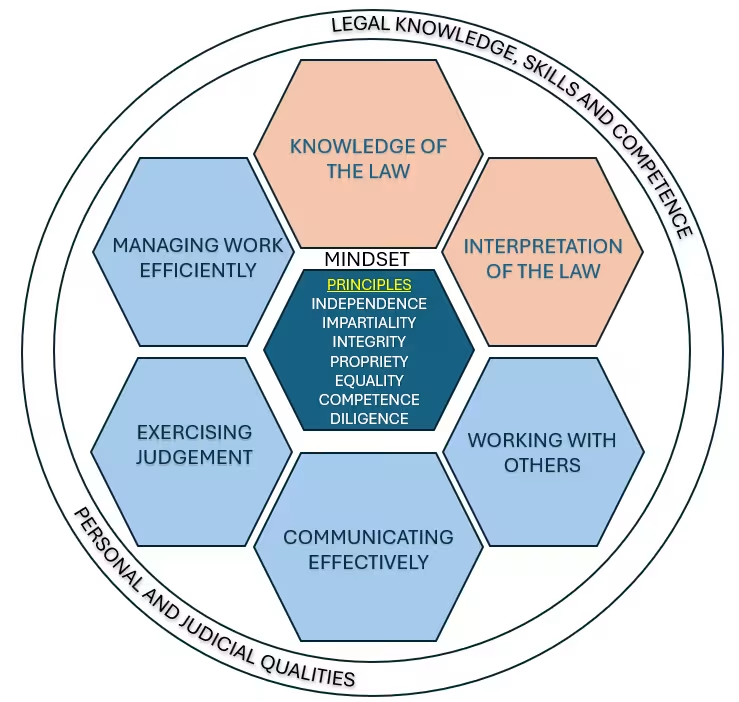
Each applicant for the office of summary sheriff will be assessed against a set of skills and qualities which are necessary for the role. These are as follows:
Knowledge of the Law
- A high level of expertise in the applicant’s area of practice
- Good working knowledge of at least one other area of substantive law commonly encountered in the Sheriff Court or evidence of motivation and ability to acquire sufficient knowledge
- Good working knowledge of the law of evidence
- Knowledge of the principles of natural justice and Sheriff Court practice and procedure
Skills and Competence in the Interpretation and Application of the Law
- Ability to analyse complex legal problems and apply the law correctly
- Ability to analyse and interpret case law and statute
- Ability to apply the law in unfamiliar areas
Managing Work Effectively
- Manages cases and time effectively
- Is diligent and hard-working
- Is confident in managing the court/hearing process
- Is able to deliver work at speed and under pressure
Communicating Effectively
- Establishes authority and inspires respect and confidence
- Modifies communication style to meet the needs of different court users
- Listens with patience and respect
- Produces written work that is clear, concise and well-reasoned
Exercising Judgement
- Remains impartial and open minded and is seen to be fair to all
- Is able to analyse and assess complex evidence and arguments
- Is able to reason clearly
- Is confident in judging and making independent decisions in the face of challenge
Working With Others
- Understands people and society
- Allows people to give of their best
- Is even-tempered and consistent
- Treats people with respect and sensitivity
Mind-set
- Shows an understanding of and commitment to the role and to public service
- Is self-aware and uses feedback and self-reflection to develop
What Are We Looking For
Readiness for this role goes beyond eligibility — it requires a strong grasp of summary criminal procedure and working knowledge of simple procedure and family law. You need to be comfortable switching between case types, making decisions under pressure, and managing your courtroom effectively.
Experience dealing with party litigants, managing sensitive situations, or working in problem-solving environments will serve you well. Confidence, emotional resilience, and the ability to handle unpredictable and sometimes distressing cases are essential.
- Sound judgement and the ability to assess complex information quickly
- Fairness and impartiality in decision-making
- Emotional resilience when handling distressing cases or challenging court behaviour
- Clear communication, especially with people unfamiliar with legal processes
- Professionalism and discretion
- Adaptability and focus, often dealing with a high volume and variety of cases
- Collegiality, working respectfully with fellow sheriffs and court staff
- You must have at least 10 years of post-qualification experience as a solicitor or advocate.
- Courtroom experience is strongly preferred, but not essential in every area.
- If you lack experience in areas like family law or summary criminal procedure, you should show the ability and commitment to learn.
- Candidates often come from diverse legal backgrounds, such as:
- Civil litigation
- Criminal prosecution
- Public service legal roles
- Tribunal work
- Prior judicial or quasi-judicial experience (e.g. serving on a tribunal or as a legal clerk) is beneficial but not required.
Application advice from a Summary Sheriff
Hear directly from a sitting Summary Sheriff as they share their experience in going through the application journey and what to consider before applying. This short video offers honest insight into the work needed to craft a successful application and the preparation required for interview.
A Day in the Life of a Summary Sheriff
Ever wondered what a typical day looks like for a summary sheriff? In this short video, a sitting Summary Sheriff will speak about life on the bench.
From preparing cases and presiding over court to making decisions that impact lives. It’s a look at the pace, responsibility, and variety that make this role both challenging and rewarding.
Key topics covered:
- What a typical day looks like
- The types of cases you’ll handle
- Skills and qualities that matter most
- What potential applicants should consider